
Lapis Lazuli
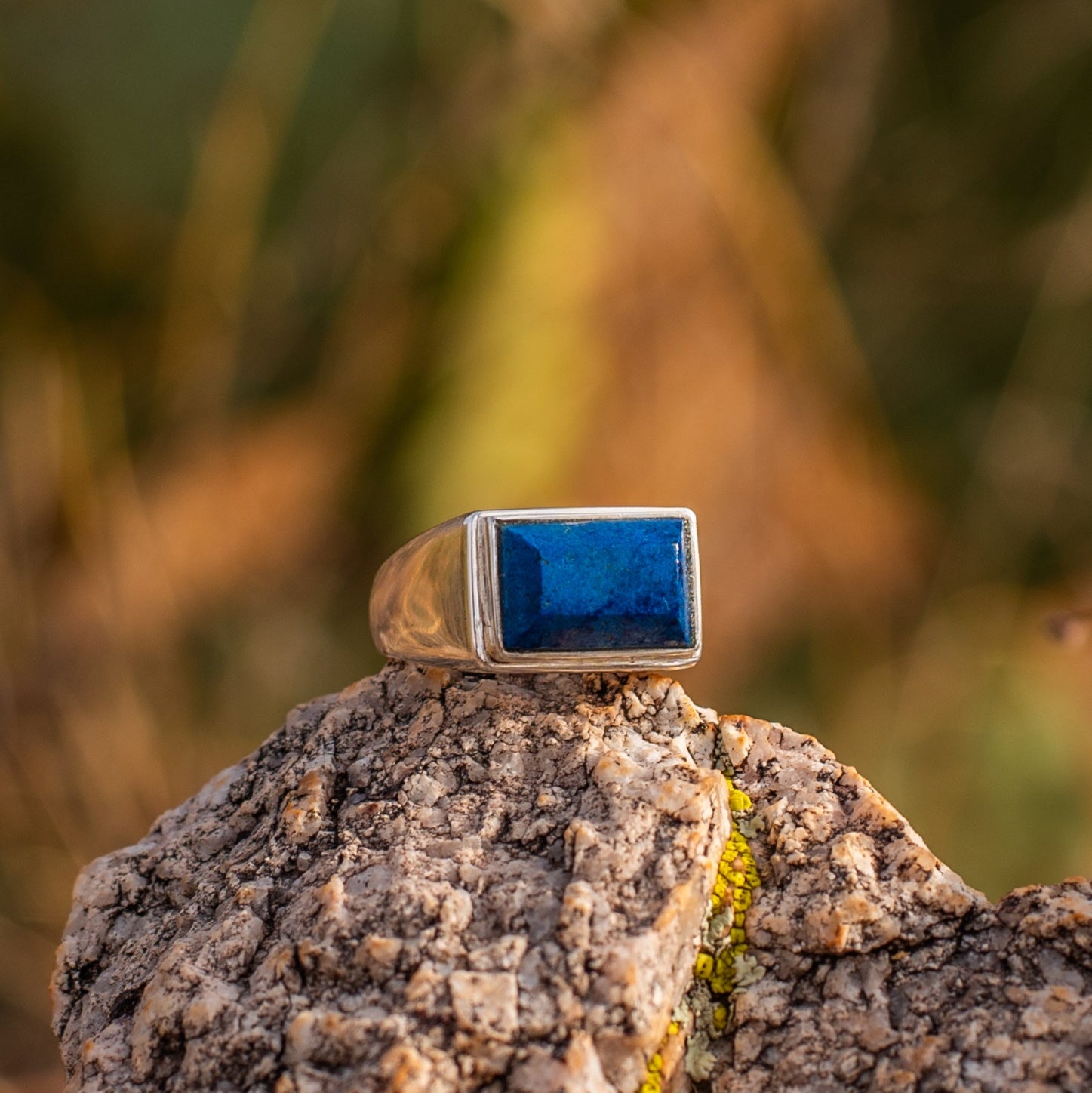
The deep blue stone that has been mined from the same mountains for over 6,000 years.
Where It's From
Nearly all fine lapis lazuli, historically and today, traces back to one remote district: the Sar-e-Sang mines in the Kokcha Valley of Badakhshan Province, Afghanistan, high in the Hindu Kush mountains. These are among the oldest continuously worked mines on Earth. Reaching them has never been easy as the mines sit at elevations over 11,000 feet and are only accessible for part of the year.
Lapis from this region has turned up in some of history's most famous artifacts, including treasures from the ancient city of Ur and the burial mask of Tutankhamun.
How It Forms
Lapis lazuli isn't a single mineral but a rock primarily composed of lazurite, along with calcite (which creates white veining) and pyrite (which creates the metallic gold flecks). It forms through a rare geologic process where limestone comes into contact with molten rock, a reaction called metasomatism, over millions of years.
The best lapis has a rich, uniform, deep blue with minimal white calcite and delicate flecks of pyrite with too much calcite and the stone looks pale and washed out; too little pyrite and it loses its signature shimmer.
Cultural History
Few stones carry as much history as lapis lazuli. Ancient Egyptians used it in burial masks and jewelry as a symbol of royalty and the heavens. Ground into powder, lapis became the pigment ultramarine, prized by Renaissance painters for its unmatched blue.
Spiritual & Traditional Meaning
In crystal healing traditions, Lapis Lazuli is known as a "stone of wisdom and truth," often associated with the third eye chakra and inner self-awareness. It's said to encourage honest communication and clarity of thought. Across Mesopotamian, Egyptian, and Persian traditions, it was also carried or worn as a protective stone. Egyptians sometimes included lapis amulets in burials for protection on the journey to the afterlife.
Caring for Lapis Lazuli
Lapis is a relatively soft, porous stone (around 5–5.5 on the Mohs scale), so a bit of care keeps it looking its best:
- Avoid prolonged sun exposure, which can dull or fade its color over time.
- Remove before swimming, showering, or using household chemicals — lapis is porous and can absorb liquids or be damaged by acids.
- Store separately from harder stones to prevent scratching.
- Clean with a soft, dry or slightly damp cloth only. Skip ultrasonic and steam cleaners.