
Green Turquoise
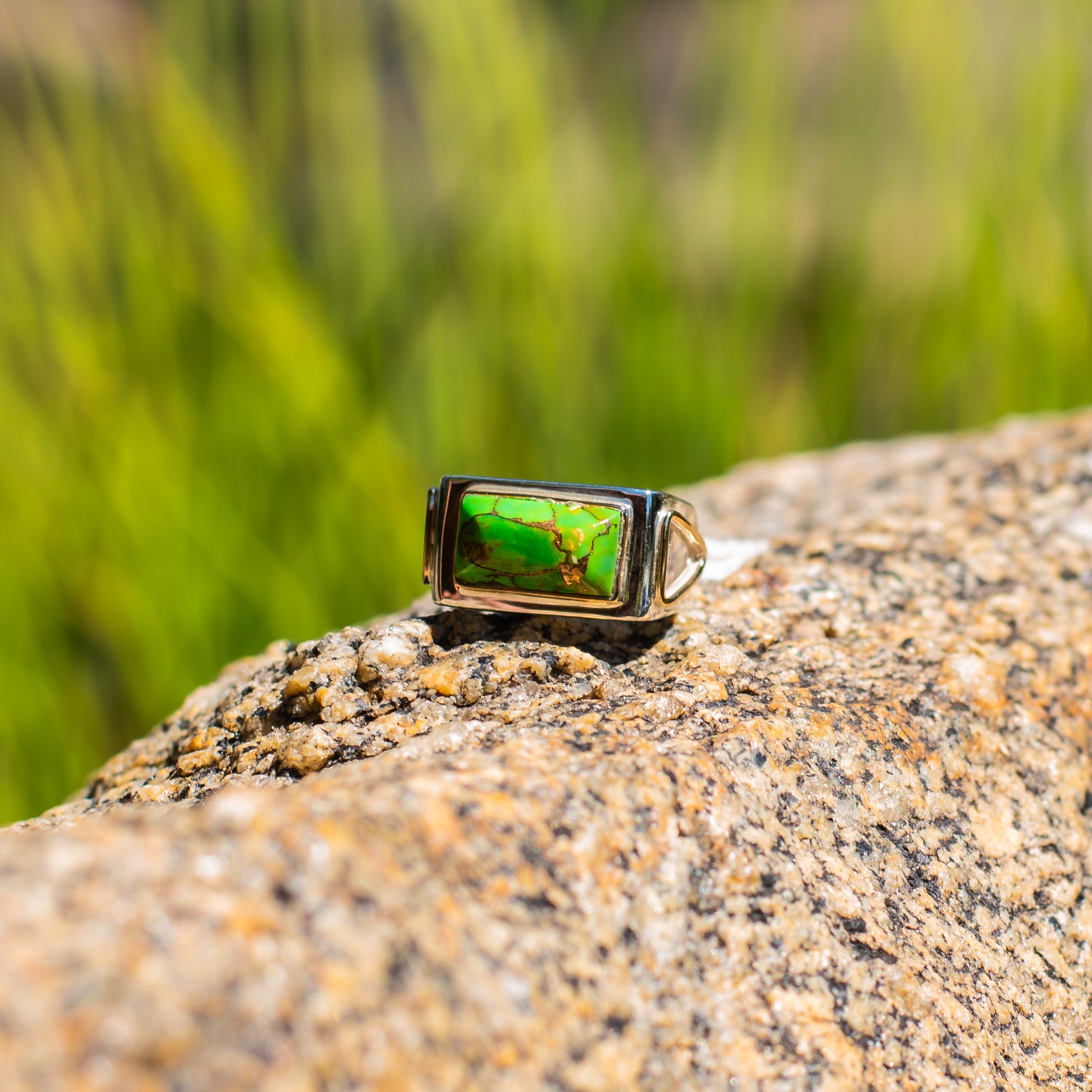
Turquoise's bold green side.
Where It's From
Green-toned turquoise turns up wherever blue turquoise does — deposits across the American Southwest, China, and Iran all produce it alongside their more famous blue material.
How It Forms
Turquoise gets its color from copper. When iron steps in and partially replaces that copper within the mineral's structure, the stone shifts away from sky blue and toward green. The more iron relative to copper, the deeper the green. It's the same underlying mineral and the same formation process as blue turquoise, crystallizing from phosphate- and copper-rich water as it moves through rock near the surface. The color is simply a matter of which trace elements happened to be available while the stone was forming. Like many turquoise varieties on the market, green turquoise is sometimes color-enhanced or dyed to even out its tone.
Cultural History
Because green and blue turquoise often come from the very same veins, green turquoise has been swept up in the same long history as its blue counterpart — worn and carved across Persian, Egyptian, Chinese, and Native American cultures for thousands of years.
Spiritual & Traditional Meaning
In crystal healing traditions, turquoise broadly is tied to protection and honest communication. The green variety is sometimes singled out for associations with renewal and a closer connection to nature, simply on account of its color.
Caring for Green Turquoise
- Turquoise is relatively soft and porous (around 5–6 on the Mohs scale), so avoid prolonged exposure to oils, lotions, perfumes, and household chemicals.
- Remove before showering, swimming, or exercising.
- Avoid prolonged sun exposure, which can fade its color.
- Clean gently with a soft, dry cloth only.